
If you have spent any time in ADHD communities on TikTok, Reddit, or YouTube, you have undoubtedly seen people praising colored noise as a miraculous breakthrough for silencing internal mental chaos.
Videos of people listening to Brown noise for the first time often depict users in shock, reporting that their "brain has never been this quiet." Meanwhile, sleep clinics recommend Pink noise, and office sound-masking systems rely on White noise.
What is the actual acoustic difference between these sound colors? Why does an ADHD brain react so strongly to low-frequency rumblings? And which noise color should you choose for studying, reading, or falling asleep?
Here is the definitive scientific comparison of Brown Noise vs. Pink Noise vs. White Noise for ADHD focus.
Experience Natural Acoustic Masking (Rain & Ambient)
Test how steady wide-spectrum acoustic masking settles background cognitive restlessness:
Gentle Rainfall (Pink/Brown Spectrum Masking)
Looping ambient drizzle to drown out sudden household sounds
What Determines the "Color" of Noise?
Just like visible light is divided into colors based on electromagnetic wavelength, acoustic noise is given colors based on how energy is distributed across different audio frequencies (from 20 Hz bass up to 20,000 Hz treble).
Sound Color Frequency Spectrum Comparison:
White Noise: [============================= Equal Energy Across All Frequencies =============================]
Pink Noise:  [==== High Bass ====] [=== Mid Frequencies ===] [== Gentle Treble ==] (-3 dB per octave drop)
Brown Noise: [======== Heavy Sub-Bass & Deep Rumble ========] [= Minimal Highs =] (-6 dB per octave drop)
1. White Noise (Equal Energy Across All Audible Frequencies)
White noise contains equal power per Hertz across the entire human hearing spectrum. Think of television static, a loud radio hiss, or a whirring industrial desk fan. Because the human ear is biologically extra-sensitive to high frequencies, white noise often sounds sharp, bright, or shrill to sensitive neurodivergent ears.
2. Pink Noise (Equal Energy Per Octave — The Natural Sound)
In pink noise, the acoustic power decreases by 3 decibels (dB) per octave as frequency increases. This creates a much softer, balanced sound profile that closely matches acoustic phenomena in nature: rustling leaves, gentle falling rain, or wind blowing through a pine forest.
3. Brown Noise (Brownian Noise — Deep Sub-Bass Rumble)
Named after botanist Robert Brown (and Brownian motion), brown noise drops off by 6 decibels (dB) per octave. This aggressive roll-off strips out almost all high-frequency treble hiss, concentrating audio power into deep, resonant low frequencies. It sounds like a distant thunderstorm, an airplane cabin in flight, or a heavy ocean swell crashing against sea cliffs.
The Science: Why ADHD Brains Crave Colored Noise
Why do people with ADHD often find silence intensely agonizing, but feel instantly calmed by a loud, low-frequency roar?
1. The Stochastic Resonance Phenomenon
Under the Moderate Brain Arousal (MBA) model, ADHD individuals produce lower baseline levels of tonic dopamine in the prefrontal cortex. Without sufficient dopamine, neural signals are weak and prone to "mind wandering" or sensory distractibility.
Stochastic Resonance occurs when optimal background acoustic noise is introduced to a sensory system. The random audio vibrations actually amplify faint neural signals, raising cortical arousal to the threshold needed for selective attention and task focus.
2. Acoustic Masking of Sudden Distractions
In an ADHD brain, the auditory gating mechanism (which filters out irrelevant background sounds) is often impaired. If you are reading in a quiet room, the sound of a pen dropping or a car driving past outside will instantly trigger an involuntary attention switch.
A steady blanket of brown or pink noise masks those acoustic spikes, protecting your working memory from being jolted.
3. Calming the Internal Monologue
Many neurodivergent adults experience a hyperactive internal monologue (racing thoughts, imaginary conversations, background songs stuck on loop). The deep, enveloping physical presence of brown noise fills sensory bandwidth, providing a comforting neurological "weighted blanket" for the auditory cortex.
Comparison: White vs. Pink vs. Brown for ADHD
| Sound Color | Acoustic Texture | Energy Distribution | Best For | ADHD Friendliness |
|---|---|---|---|---|
| White Noise | Sharp static, fan hiss | Equal across all frequencies | Speech privacy in offices | Low (Can trigger sensory irritation) |
| Pink Noise | Steady rainfall, ocean surf | Drops 3 dB per octave | Deep reading, memory consolidation | High (Soothing & natural) |
| Brown Noise | Deep thunder, airplane cabin | Drops 6 dB per octave | Task initiation, stopping racing thoughts | Very High (Warm & grounding) |
How to Use Sound Colors During Your Study Sprints
To turn sound masking into a productive work habit rather than just passive background listening:
Step 1: Pair with a Bounded Timer
Never listen to noise aimlessly for four hours. Combine sound with a structured interval using an online Pomodoro timer:
Click start to begin this focus block.
Step 2: Keep the Volume Moderate
Noise should sit in the background (around 50 to 65 decibels, comparable to normal conversation). Blasting noise at high decibels to "force" focus can cause auditory fatigue or damage hearing over time.
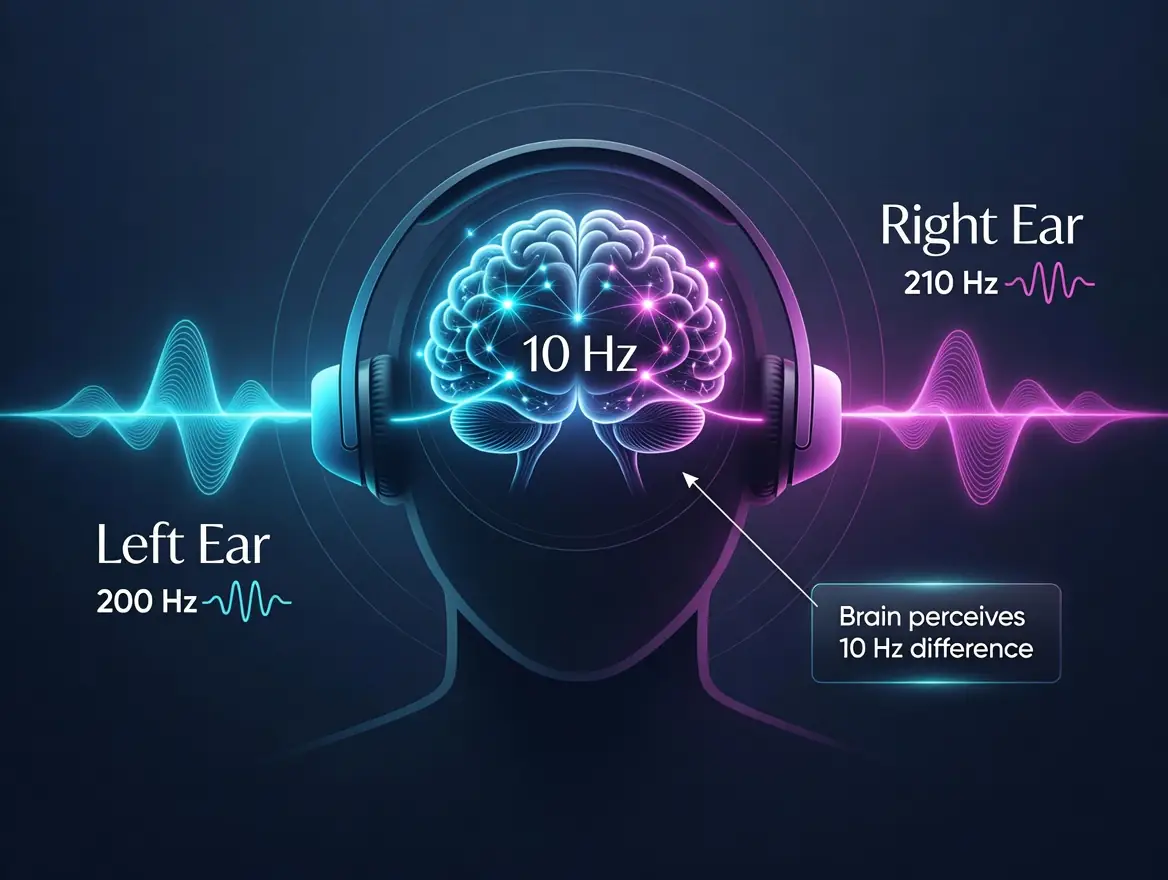
Step 3: Layer with Binaural Beats or Ambient FX
In the FocusLive Ambient Studio and Binaural Beats Generator, you can blend pink and brown frequencies underneath rain, cafe hum, or 40 Hz gamma tones to create your ultimate custom study cockpit.
Try it now
Open FocusLive with the FocusLive ambient sound generator
Mix gentle rainfall, soothing pink noise, and cafe soundscapes to drown out distractions and conquer task paralysis.
Open Free Ambient Studio